A custom canopy top is sold on a short list of specs – a denier number, a waterproof claim, sometimes a flame rating – and buyers tend to fixate on whichever one the product page puts in the biggest font. The problem is that those specs measure different things, and a great number in one column does not fix a weak one in another. A 600-denier top with no real coating still leaks, and the most waterproof canopy on the market can be turned away at a venue gate if it has no flame certificate. Here is what each spec actually tells you before you approve a bulk order.
Denier is thread thickness, not the whole story
The denier rating – the number written as 420D, 500D, or 600D – measures the thickness of the polyester yarn woven into the top. Higher denier means a heavier, thicker thread, which generally translates to better abrasion resistance and a longer life across repeated setups and teardowns. A 420D top is the budget tier, fine for occasional fair-weather use. 500D is the common mid-range all-rounder. 600D is the heavy-use choice for a tent that lives in a truck and goes up every weekend. If your canopy is a working tool rather than a once-a-season prop, paying up a denier tier is usually the cheapest durability you can buy.
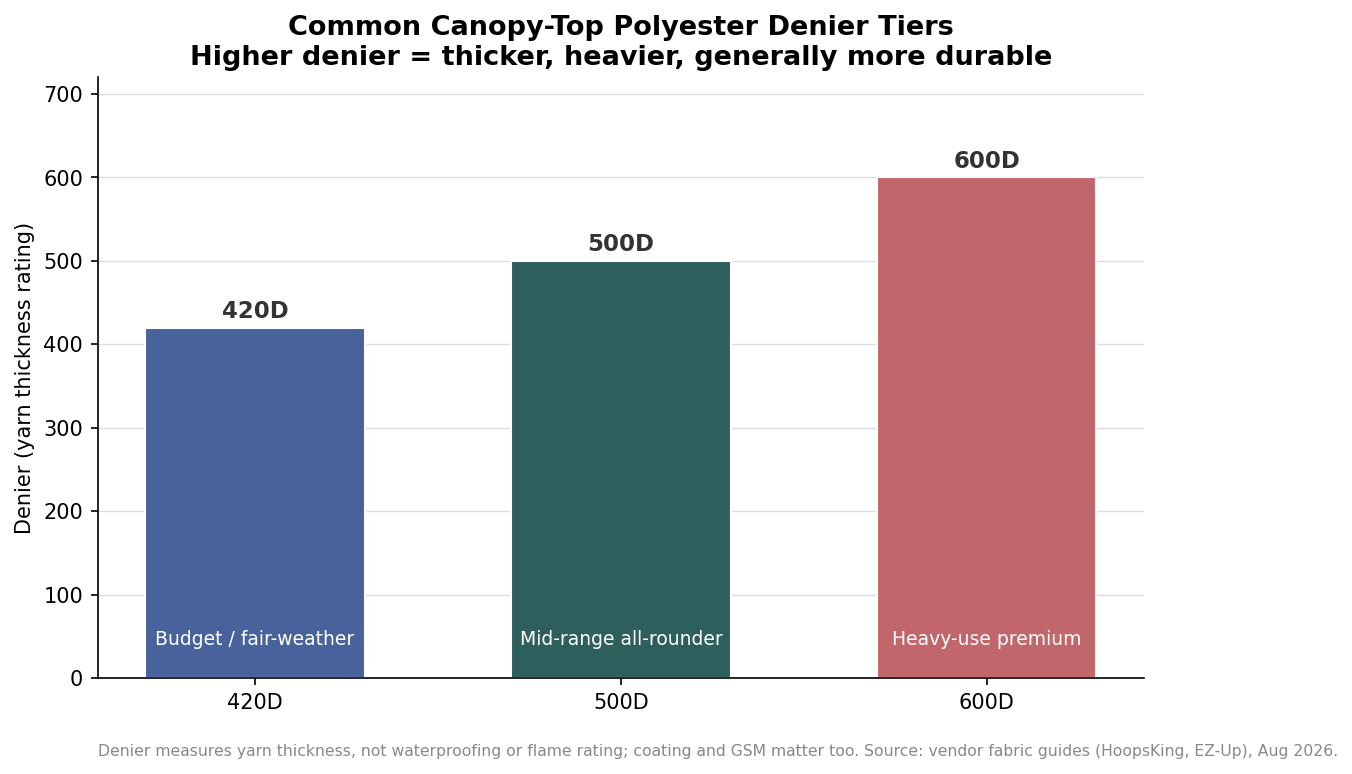
What denier does not tell you is how the fabric handles rain, sun, or fire. It is a measure of the yarn, so treat it as a durability proxy and then check the other specs separately rather than assuming a high denier covers everything.
Denier also only applies to woven polyester tops, which are the printable, event-grade standard. Some rock-bottom canopies use a polyethylene top instead – the same family of material as a poly tarp – which is cheaper and lighter but takes graphics poorly, creases, and generally ages faster in sun. If a quote is dramatically below the others and quotes no denier figure at all, the top is often polyethylene rather than woven polyester, and that is worth confirming before you compare on price alone.
Waterproofing comes from the coating, not the denier
A canopy sheds water because of the coating applied to the fabric – typically a polyurethane (PU) layer – and the rating that describes it is hydrostatic head, measured in millimeters. That number is how tall a column of water the fabric can hold back before it seeps through. General outdoor-fabric guidance puts roughly 1,000 to 1,500 mm at the “light showers” level, with about 1,500 mm often treated as the floor for calling something waterproof at all. 2,000 to 3,000 mm handles moderate rain with extended exposure, and 5,000 mm and up is the territory for heavy rain and standing water. The ranges below are general thresholds, not any single product’s spec, so ask a supplier for the actual coating rating rather than accepting the word “waterproof” on its own.
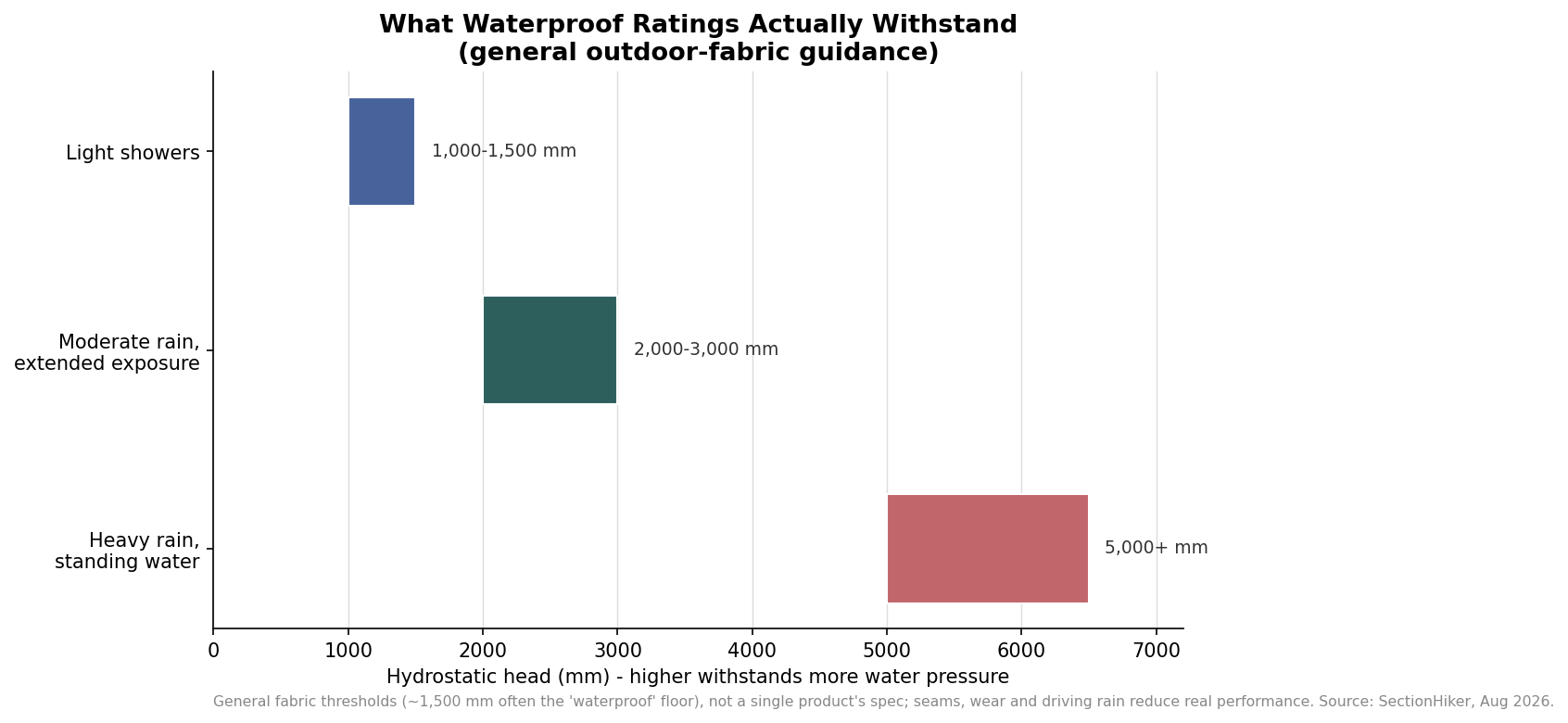
Two cautions keep expectations honest. Lab ratings assume static water pressure, so driving rain and someone leaning a wet forearm on the fabric will beat a top sooner than the number suggests. And a canopy is only as dry as its weakest seam; unsealed stitch lines and worn coatings leak long before the fabric itself does. For an event top that has to keep product dry, a mid-range hydrostatic rating with sealed seams beats a high number with open ones.
UV, weight, and how the top ages
The spec sheet rarely lists a UV number, but sun is what actually kills most canopy tops. Ultraviolet exposure fades printed color and slowly embrittles the fibers, which is why a tent used at outdoor markets every weekend looks tired in a year or two while an occasional-use top stays crisp far longer. Higher-denier fabrics and better coatings resist fading somewhat better, but no polyester top is immune, so plan on the graphics being the first thing to age and factor a reprint or replacement into a multi-year plan. Weight is the quiet tradeoff running underneath all of this: the thicker, more coated, more durable a top is, the heavier it is to haul and raise, so match the spec to whoever actually sets the tent up and how often.
The flame certificate a venue will ask for
This is the spec most first-time buyers miss, and it is the one that gets a tent turned away at the gate. Many indoor venues, and a growing number of outdoor events, require canopies to meet a recognized flame standard. The two you will see named are CPAI-84, which was written for tents and outdoor shelters, and NFPA 701, the flame-propagation standard commonly required for fabrics in public assembly and indoor spaces. Both are tested in a lab that exposes the fabric to flame and measures how it spreads and whether it self-extinguishes. Food vendors draw extra scrutiny because of open flames and cooking equipment, even outdoors.
What matters at purchase is the paperwork. A compliant top ships with an official flame certificate from an accredited testing lab, and some jurisdictions go further – California, for example, expects the certification to be affixed visibly to the canopy so a fire marshal can verify it on the spot. Certificates can require periodic renewal, so a decade-old tent may no longer satisfy an inspector even if it once did. Before you approve a custom run, confirm which standard your typical venues require, ask the supplier to provide the certificate up front, and make sure the flame-rated fabric is the one your artwork is actually printed on. Getting that settled before production is far cheaper than discovering it at a gate on event morning.