Custom canopy tents last longest when you wash them gently with mild soap, dry them completely before packing, weight every leg at every event and store them cool, dry and off the floor. This care guide from Customized Canopy Tents covers cleaning, drying, storage, frame upkeep, roof replacement and a simple post-event checklist your team can follow.
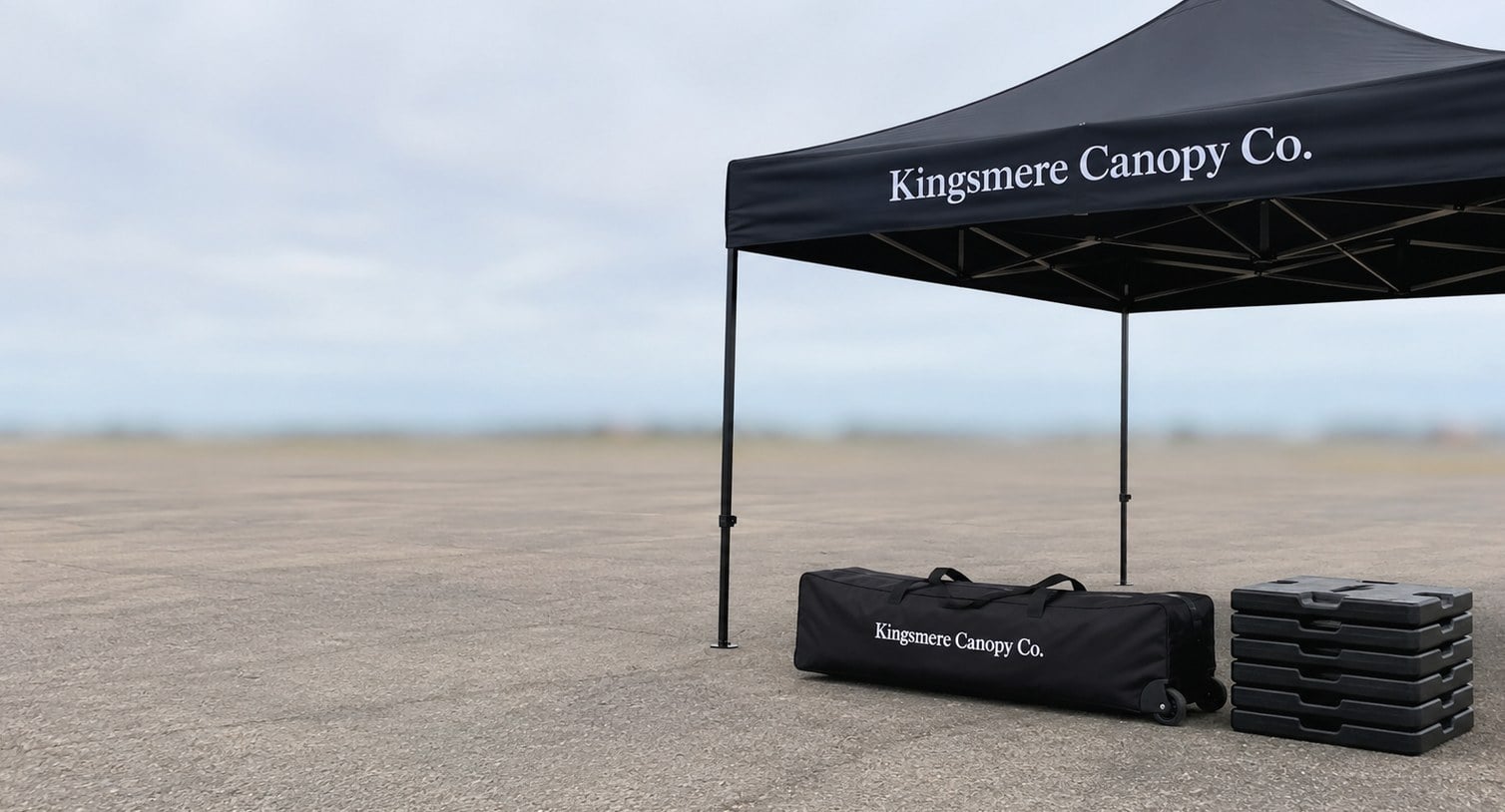
- Wash printed roofs by hand with mild soap, never a pressure washer
- Never pack a damp canopy tent; dry seams and hems fully first
- Weight every leg at every outdoor event to prevent wind damage
- Replacement printed roofs and sidewalls fit existing frames
- Free mockup within 24 hours, about 2 weeks to produce
How do you clean a custom canopy tent without damaging the print?
Clean a custom canopy tent with cool or lukewarm water, a mild soap and a soft brush or sponge, working while the roof is still on the frame. Customized Canopy Tents recommends gentle hand cleaning because harsh chemicals, stiff bristles and high-pressure spray are the fastest ways to dull a printed roof or scuff a logo before its time.
Raise the canopy tent to full height on a clear day, rinse loose dust and grass first, then wash small areas at a time. Rinse every trace of soap away, since leftover residue attracts dirt and can leave a film over the printed colors. Treat the valance and sidewalls the same way, paying extra attention to the bottom edges that drag on wet ground.
- Brush off dry debris, leaves and bird droppings before adding water.
- Mix a small amount of mild soap into a bucket of cool water.
- Wash with a soft sponge in straight passes, not hard scrubbing circles.
- Rinse thoroughly with a garden hose on a gentle setting.
- Leave the canopy tent standing until every panel is completely dry.
Avoid bleach, solvents, degreasers and abrasive pads on any printed panel. If a stain will not lift with soap and patience, spot clean it rather than scrubbing the whole roof harder.
Why does drying matter more than washing for canopy tents?
Drying matters more than washing because a canopy tent packed while damp can develop mildew, odor and permanent spotting within days, even if it went into the bag clean. Customized Canopy Tents tells every buyer the same thing: never zip a wet roof or sidewall into a storage bag and leave it there.
Moisture hides in seams, folds, corner pockets and the hook-and-loop strips that join the roof to the frame. A canopy tent can look dry on top while the underside and the valance hems are still holding water. Polyester fabric dries quickly in open air, but only if it is spread out with airflow on both sides.
- After rain at an event: pack the canopy tent if you must, then unpack and open it again as soon as you are back at base.
- Indoors: raise the frame in a warehouse, garage or gym and let a fan move air across the roof.
- Outdoors: dry in shade or mild sun, then bring the canopy tent in before evening dew settles.
- Check by touch: feel the seams, corners and inside of the valance before you fold anything.
If you discover a damp canopy tent days later, open it immediately, wash any spotted areas gently and dry it fully. Catching moisture early is far easier than removing mildew from a printed panel.
How should custom canopy tents be folded and stored between events?
Store custom canopy tents clean, fully dry, loosely folded and off the floor in a cool, shaded space. Customized Canopy Tents suggests keeping each printed roof in its own bag with the frame, so the fabric is protected from sharp frame edges, oil and pests between uses.
How you fold a printed roof affects how it looks at the next event. Hard creases pressed into the same spot every time can show through a full-color design, so vary the folds slightly and avoid stacking heavy gear on top of the bag. On a folding frame, many teams leave the roof attached and collapse the canopy tent with the fabric gathered evenly, which reduces handling and keeps the roof seated on the frame.
| Storage choice | Good for canopy tents? | Why |
|---|---|---|
| Climate-controlled storeroom or office closet | Best | Stable temperature and low humidity protect fabric and print. |
| Dry garage or warehouse shelf | Good | Fine if the bag stays off the concrete and away from fuel or chemicals. |
| Vehicle trunk or trailer | Short term only | Heat and trapped moisture build up quickly. |
| Outdoor shed or damp basement | Avoid | Humidity and pests are the main causes of mildew and chewed fabric. |
Label every bag with the team, location or event the canopy tent belongs to. Labeled bags make it easy to rotate stock and spot a tent that has not been opened since last season.
What shortens the life of a custom canopy tent?
Wind, moisture and rough handling shorten the life of a custom canopy tent far more than normal sun exposure or regular use. Customized Canopy Tents sees the same causes again and again: a canopy tent left up unweighted in a gust, a roof packed wet, or a frame forced open with a stuck joint.
Wind is the biggest single risk. A canopy tent acts like a sail, and without proper ballast it can lift, twist the legs and tear the roof at the corners. Our weight plates and anchoring kits exist for exactly this reason, and every canopy tent should be weighted on every leg at every event, including calm-looking days.
- Leaving a canopy tent up overnight: unattended tents face wind, dew and theft risk with no one to lower them.
- Dragging the bag: pulling a packed canopy tent across pavement wears through the bag and then the fabric.
- Forcing the frame: pushing a jammed joint bends trusses and can pinch or tear the roof.
- Grilling or heaters too close: heat sources under or beside the roof can scorch fabric.
- Tape and adhesive on the print: stickers and tape pull at the printed surface when removed.
Lowering the canopy tent to its shortest height in rising wind, and taking it down entirely when the forecast turns, protects both the frame and the branding you paid to put on it.
Does frame grade change how long canopy tents last?
Frame grade changes how long canopy tents last because the frame takes the stress of every setup, every gust and every trip in a vehicle. A sturdier frame holds the roof tighter and more evenly, which also keeps the printed fabric from flapping, stretching and wearing at the corners.
If your canopy tents go up every weekend or stay out through full-day markets, a heavy-duty folding frame is usually worth considering over a lighter frame designed for occasional use. The tradeoffs are explained in our guide to commercial vs. economy canopy frames. Customized Canopy Tents can quote both on one mockup so you can compare.
Whatever frame you choose, a little maintenance helps it last:
- Wipe sand and grit out of sliding joints after beach, turf or dirt-lot events.
- Check that push buttons and height pins click fully into place before raising the roof.
- Replace a bent leg or broken truss part before the next event instead of running a damaged frame.
- Keep feet and leg ends clean so ballast sits flat and secure.
When should you replace a printed roof instead of the whole canopy tent?
Replace only the printed roof when the frame is still straight and sound but the fabric is torn, faded, stained or showing an outdated logo. Customized Canopy Tents offers printed roofs and replacement tops for this reason, so a healthy frame can keep working under fresh branding.
A full replacement makes more sense when the frame has bent legs, cracked joints or parts that no longer lock, or when you are moving to a different tent size. Sidewalls follow the same logic: a stained or torn wall can be replaced on its own through our printed sidewalls and half walls page without touching the roof.
Many buyers keep one spare printed roof on hand for their busiest canopy tent. A spare means a damaged roof never takes a branded tent out of service in the middle of a season, and the old roof can be retired or used for back-of-house setups.
What should a post-event canopy tent checklist include?
A post-event canopy tent checklist should cover cleaning, drying, a quick frame inspection, a parts count and a note of any damage, done the same day the tent comes back. Customized Canopy Tents recommends assigning one person to own this checklist so every canopy tent returns to storage ready for the next event.
- Unpack: open every canopy tent that came back damp or dirty.
- Clean: spot clean or wash the roof, valance and walls with mild soap.
- Dry: leave everything standing until seams and hems are dry to the touch.
- Inspect: look for small tears, loose stitching, bent legs and sticky joints.
- Count: confirm stakes, straps, weights and sidewalls are all in the bag.
- Log: write down any repairs or replacement roofs to request.
- Store: fold loosely, bag, label and shelf it off the floor.
When the log shows a roof or wall nearing the end of its life, request a quote early. A free mockup arrives within 24 hours and standard production takes about 2 weeks after approval, so planning replacements between events keeps your canopy tents in service. You pay nothing until you approve the design. See how it works or start at the custom quote page.
Frequently asked questions
Can a custom canopy tent roof go in a washing machine?
A custom canopy tent roof should not go in a washing machine. Machine agitation can stress seams, crease the printed fabric and damage the hook-and-loop strips that attach the roof to the frame. Customized Canopy Tents recommends hand washing the roof on the frame with cool water, mild soap and a soft sponge, then rinsing and drying it fully in open air before folding.
Is a pressure washer safe for cleaning canopy tents?
A pressure washer is not a safe choice for cleaning printed canopy tents. Concentrated high-pressure spray can fray fabric, weaken stitching and wear down the printed surface of a logo. A garden hose on a gentle setting, a soft brush and mild soap clean canopy tents effectively while protecting the branding, the seams and any water-resistant finish on the fabric.
How do you remove tree sap from a printed canopy tent?
Tree sap on a printed canopy tent should be treated gently and early. Let the sap harden if it is fresh, lift what you can with a soft plastic edge, then spot clean the area with mild soap and water. Avoid solvents and abrasive pads on the print, and test any cleaner on a hidden corner of the canopy tent first.
Can canopy tents be left set up overnight at a multi-day event?
Canopy tents can stay up overnight at a multi-day event only when they are fully weighted on every leg and the forecast is calm, but lowering them is safer. Customized Canopy Tents suggests dropping each canopy tent to its lowest height or collapsing it overnight, since unattended tents face wind gusts, dew and theft risk with nobody nearby to react.
Does sunlight fade the logo on a custom canopy tent?
Long periods of strong sunlight can gradually soften the colors on any custom canopy tent, so storing tents out of the sun between events helps the logo stay bright. Customized Canopy Tents uses printing methods chosen for outdoor use, and buyers who want the most vivid, long-lasting color can compare options on the dye-sublimated canopy tents page before ordering.
What is the best way to transport custom canopy tents in a vehicle?
Custom canopy tents travel best packed in their bags, laid flat or upright, with nothing heavy stacked on top and no sharp tools pressed against the fabric. Load them last so they come out first, and keep them away from fuel cans and coolers that may leak. Carrying the bag instead of dragging it protects both the canopy tent and its wheels.
Should canopy tent sidewalls be stored separately from the roof?
Canopy tent sidewalls are easiest to manage when folded and stored in a separate labeled pouch inside or beside the tent bag. Keeping walls apart from the frame prevents snags, and labeling them by position or message speeds setup. Customized Canopy Tents recommends drying sidewalls as carefully as the roof, since their bottom edges usually pick up the most moisture.
How can a small tear in a canopy tent roof be handled before the next event?
A small tear in a canopy tent roof should be cleaned, dried and patched from the underside with a fabric repair patch made for outdoor polyester as soon as it is found. Small tears grow quickly in wind. If the damage sits near a corner, seam or the printed logo, Customized Canopy Tents can quote a replacement printed roof for the same frame.
How often should a business inspect its branded canopy tents?
A business should inspect its branded canopy tents after every event and give the whole set a fuller review at the start of each busy season. The quick check covers fabric, seams, legs and parts. The seasonal review is a good moment to request quotes from Customized Canopy Tents for any roofs, walls or frames that need replacing before demand picks up.
Can a canopy tent be stored in a hot car trunk all summer?
A canopy tent should not live in a hot car trunk all summer. Trapped heat and humidity can encourage mildew, weaken fabric coatings and stress plastic frame parts over time. Move each canopy tent to a cool, dry storeroom between events, and if it must ride in a vehicle for a few days, make sure it was completely dry when packed.
Do weights help a canopy tent last longer?
Weights help a canopy tent last longer because they stop wind from lifting, twisting and dropping the frame, which is how many legs bend and roofs tear. Every canopy tent should be weighted on every leg at every outdoor event. Customized Canopy Tents offers weight plates and anchoring kits that can be added to the same order as the printed tents.
What should be in a canopy tent repair kit for event staff?
A canopy tent repair kit for event staff should include fabric repair patches, spare hook-and-loop straps, extra stakes, a few replacement pins or clips for the frame, a soft brush and a clean towel for wiping wet panels. Keeping one kit with each set of canopy tents lets staff fix small problems on site instead of sending a damaged tent home.
Get a free mockup for your canopy tents
Send your logo or idea and the quantity you have in mind. Customized Canopy Tents returns a free mockup within 24 hours, you approve the design before anything is produced, and standard turnaround is about two weeks with faster options available. Get a custom quote.